Stories of Impact
Women, girls, trans, and intersex people are making waves in their communities—and Women’s Fund Asia is also shifting currents in funding.
Scroll through to read highlights and impact stories about our collective work.
Sexual and reproductive justice
Grantee partners are advancing bodily autonomy, decision making, and sexual rights of women, girls, trans, and intersex people in Asia. This includes ending discrimination in law and social practice, changing negative gender norms, providing sex education, ending child and forced marriage, enabling access to abortion, preventing violence and advocating for the legal recognition of trans and intersex people.
Over twenty years, we have:
DISBURSED
USD 3.4 million
STRENGTHENED
159 grantee partners
Through WFA’s support, groups were able to:
Contribute to 38 laws across Asian countries to end discrimination in law for women, girls, trans, and intersex people.
Support 29,000+ girls in 8 countries who were vulnerable to child and forced marriage.
Promote access to safe abortion, contraceptives, and comprehensive sexuality education, while challenging harmful practices including conversion therapy and female genital mutilation.
WFA is one the top ten funders for LBTQI+ rights in the region according to the Global Philanthropy Project.
From Shadows to Equality:
The Fight for Love and Recognition
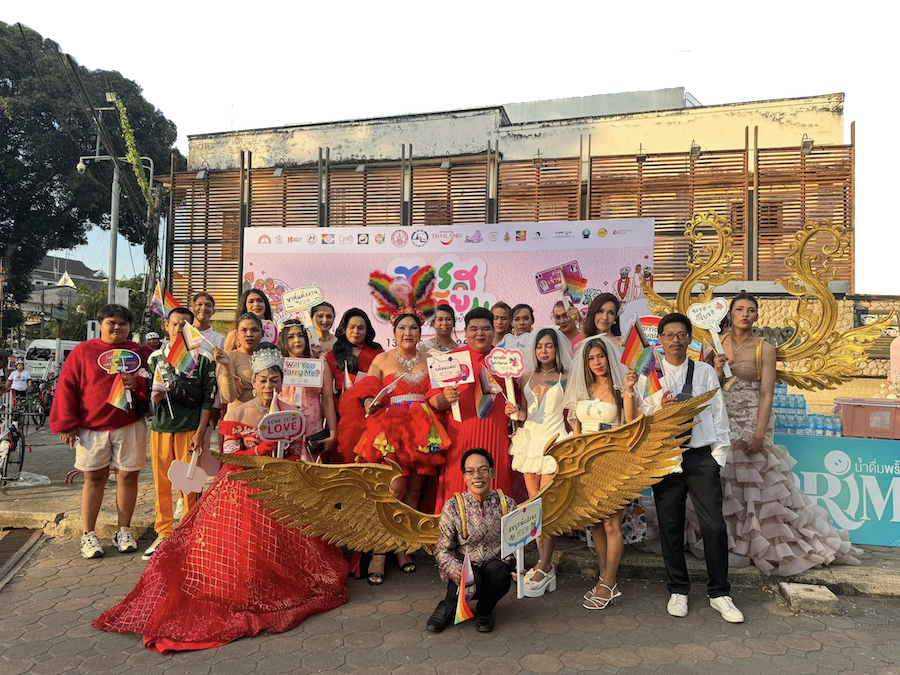
Thailand’s LGBTQI+ community lived in a paradox. Cultural acceptance flourished, but legal recognition lagged. Trans women could live openly, yet couldn’t legally marry or have their gender identity recognised. Legal invisibility meant partners couldn’t make medical decisions and families faced property disputes.
Payoon Sri Trang Group changed everything. Founded and led by trans women, they believed if trans people were going to win their rights, they needed to lead the fight themselves.
With WFA’s 2020 grant, Payoon Sri Trang Group didn’t just advocate—they organised. They brought together trans women across Thailand, teaching advocacy skills and transforming individual struggles into collective action. They collaborated with policy makers and government agencies and built alliances with lawmakers to ensure inclusion and access to services.
Isolated voices became a movement and persistence paid off. In 2024, Thailand’s marriage equality bill passed, making it Southeast Asia’s first country to legally recognise same-sex marriage. Celebrations erupted nationwide—but this was just the beginning. The fight now continues for gender recognition legislation and full anti-discrimination protections.
Payoon Sri Trang Group proved that when marginalised communities lead their own fight for justice, they don’t just win rights—they redefine what equality looks like under the law.
From Risk to Resilience: How 30 Villages Said No to Child Marriage
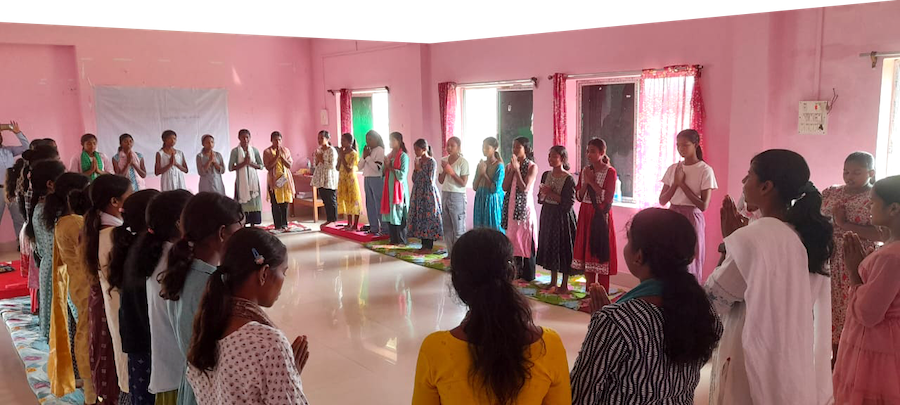
In the remote Dumka district of Jharkhand, child marriage had long been accepted as inevitable. For generations, girls—especially from indigenous and marginalised communities—were pulled out of school and married before their 18th birthdays, often with little say in the matter. Statistics confirmed the scale of the problem: nearly 1 in 3 women in Jharkhand were married as children (UNFPA India, 2021).
But one organisation dared to change the story.
Founded in 1998, Ayo Aidari Trust (AAT) began by supporting survivors of domestic violence. Over time, the organisation’s work grew to address deeper, systemic issues like child marriage. With a focus on prevention, AAT launched a bold initiative across 30 villages in Dumka.
Through life skills workshops, peer mentoring, and access to government education schemes, AAT empowered girls to stay in school and speak up. At the same time, AAT engaged local governance leaders—gram pradhans—to raise awareness about the legal and social consequences of child marriage and gender-based violence.
The results were remarkable.
Ayo Aidari Trust’s work is proof that with the right support, entire communities can be mobilised to protect girls’ rights and reshape cultural norms—one village at a time.
Economic justice
Grantee partners are working to demand fair wages, safe workplaces and social security support, and secure land rights. They are particularly focused on workers in unorganised and vulnerable sectors such as agriculture and farming, garment factories, construction, tea plantations, sex work, domestic work, migrant labour, and informal work.
Over twenty years, we have:
DISBURSED
USD 5.1 million
STRENGTHENED
103 grantee partners
Through WFA’s support, groups were able to:
Support 65,000+ women and girls and 21,000+ trans people to gain greater access to economic entitlements, social protection, income, and livelihood opportunities.
Strengthen enforcement mechanisms for addressing workplace rights violations and gender-based violence.
Advocated for the rights and dignity of sex workers, including decriminalisation and destigmatisation.
Mobilise workers from vulnerable labour groups to collectivise and demand fair wages, workplace protections, and social security.
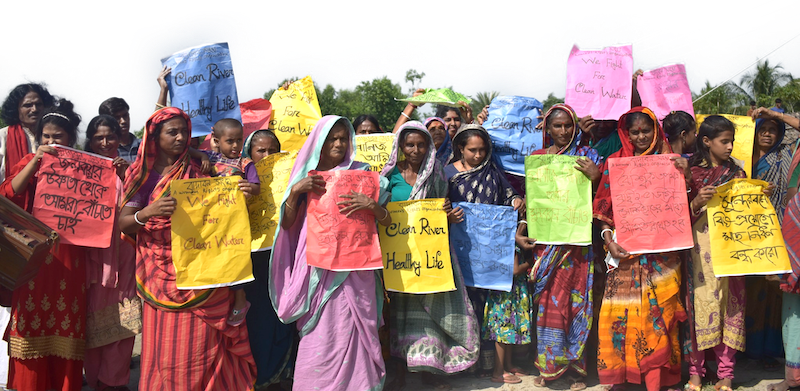
Claiming Their Ground: Land Rights Leaders in Bangladesh
In Bangladesh, only 5% of women own land, and they are systematically dispossessed by discriminatory laws and gender norms. Coercion and fraud routinely steal families’ security, with women having no recourse or voice to resist.
Badabon Sangho recognises that this injustice demands both grassroots action and policy change. Since receiving their first WFA grant in 2019, they’ve built a comprehensive approach: providing practical training to navigate complex bureaucracies, building awareness on land rights, and mobilising women for collective action.
Their strategy transformed individual vulnerability into collective power. Over three years, Badabon Sangho reached more than 14,000 women, girls, and trans people. They didn’t just educate—they organised, mobilising over 4,600 women from 11 districts to create the Women Land Rights Network.
This network became a force for legislative change. Through strategic advocacy, they helped shape the Land Crime Prevention and Remedy Act 2023—groundbreaking legislation that criminalises forced eviction and related crimes.
The transformation goes beyond policy. Women who once feared speaking even at home, now lead public gatherings and advocate for others.
“Women who didn’t speak even inside the family are now speaking in public gatherings. They have built a movement that seeks not just land rights for women but greater economic justice. This is our biggest achievement,” says Badabon Sangho’s Chairperson.
Badabon Sangho proved that strategic organising doesn’t just empower individuals—it transforms entire legal systems and creates lasting economic justice.
From Invisible to Unstoppable: Transforming India’s Hidden Workforce
Over 150 million women are estimated to work in the unorganised sector in India (ILO, 2018).
These women are the backbone of India’s economy, yet systematically excluded from basic protections. No fair wages, no childcare support, no pensions, no recourse when facing workplace violence. They work in shadows, unregistered and unheard.
Spandhana recognised that invisibility was a weapon wielded against these women. With WFA’s support since 2016, they’ve been transforming realities through their dedicated labour resource center in Karnataka State.
Their approach was revolutionary: make the invisible visible. They empowered nearly 10,000 women workers to access essential entitlements—identity documents, insurance, scholarships for their children. What seemed impossible became systematic change.
The transformation goes beyond paperwork. Women who once couldn’t speak about their own experiences now lead movements for others.
“Spandhana is our space and has helped us evolve as leaders. I came to the resource centre as an intimate partner violence survivor who couldn’t even express the violence that I had endured. Now I address thousands of women and articulate their issues. It has been a huge journey,” shares the Program Coordinator.
Spandhana proved that when invisible women claim their space, they don’t just gain rights—they become unstoppable forces for systemic change.
Environmental justice

Across the region, women, girls, trans, and intersex people are addressing the impacts of climate change and environmental degradation on rights, livelihoods, and access to natural resources. Grantee partners are leading community-based work on natural resource management, environmental protection, climate crisis response, disaster risk reduction, and food security. This includes efforts to improve the participation and leadership of diverse communities, including women with disabilities, indigenous women and farmers, and trans, people.
Over twenty years, we have:
DISBURSED
USD 3.4 million
STRENGTHENED
64 grantee partners
Through WFA’s support, groups were able to:
Set up 69 women-led climate change mitigation programmes across 10 Asian countries.
Strengthen food sovereignty and sustainable farming practices led by women and local communities.
Preserve traditional environmental knowledge and practices among women and indigenous groups.
Address the impacts of climate change on indigenous women, women with disabilities, and other marginalised groups by strengthening their leadership and participation in policy discussion.
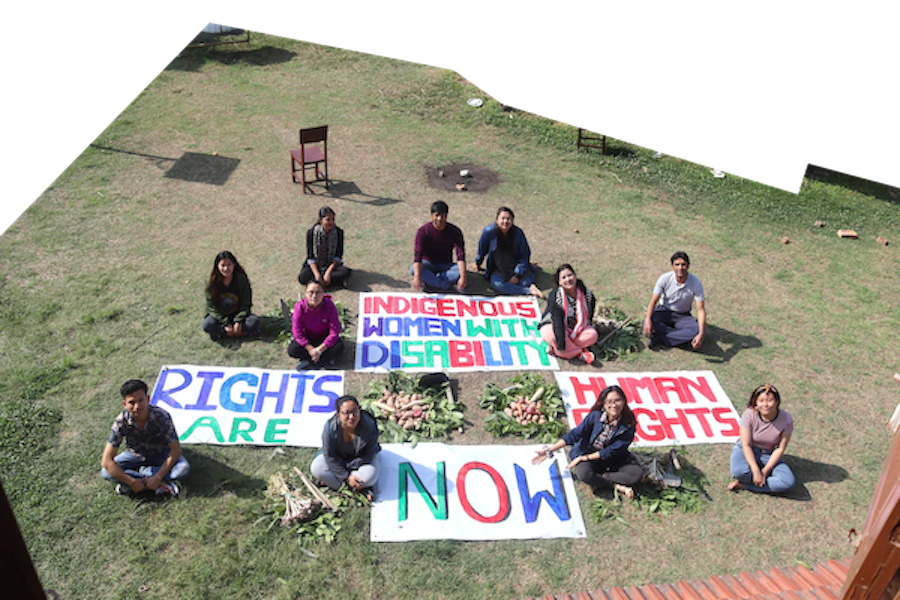
How Indigenous Disabled Women Rewrote the Climate Rulebook
Indigenous women with disabilities face triple vulnerability in Nepal: displacement because of climate change, discrimination because of their identity, and violence because of their disabilities.
This reflects a harsh reality across the country. Climate change deepens existing inequalities, placing women and girls at greater risk of violence. For indigenous women with disabilities, these impacts compound into a crisis of invisibility—their voices lost between environmental, gender, disability, and indigenous rights spaces.
NIDWAN recognised that this intersectional reality demanded intersectional advocacy. Led by indigenous women with disabilities themselves, the National Indigenous Disabled Women Association Nepal has documented these compounding effects across the country, with WFA’s support since 2015 providing the foundation for their vital work.
Their strategy was bold: take local realities to global platforms. In 2022, NIDWAN submitted evidence to the UN Special Rapporteur on violence against women and girls, ensuring these often-overlooked experiences reached international attention.
At COP27 and COP28, NIDWAN transformed climate conversations. As one of the few organisations representing this critical intersectional issue, they advocated for disability-inclusive climate action, raised Indigenous disability rights visibility, and built cross-movement alliances.
Their presence pushed disability inclusion onto official Indigenous statements and wider climate justice dialogues. Women who were once invisible to policy makers, now have their experiences driving international climate policy.
NIDWAN proved that when the most marginalised lead their own advocacy, they don’t just gain representation—they reshape global conversations entirely.
From Devastation to Restoration: Breaking the Cycle of Violence Cycle
There is a devastating cycle spreading across Northern Sumatra. Palm oil expansion and coal-powered plants have ravaged local ecosystems, forcing agrarian and fishing communities into survival mode. As livelihoods collapse, intimate partner violence increases—environmental degradation literally destroying families from within.
Srikandi Lestari Foundation recognised that women held the key to breaking this cycle. With WFA’s support since 2022, they’ve been equipping women to lead comprehensive local solutions that address environmental, economic, and gender justice simultaneously.
Their approach proved transformational. Women-led rehabilitation efforts resulted in planting 5,000 mangrove trees, directly restoring the ecosystem that communities depend on. But they didn’t stop at environmental repair—they built sustainable livelihoods and provided legal rights education, understanding that lasting change requires multiple interventions.
The impact scaled beyond local restoration. By highlighting how coal plants harm traditional farming and fishing, the Foundation sparked a national coalition against coal-based power plants, connecting local struggles to broader environmental justice movements.
Srikandi Lestari Foundation demonstrated that when women lead environmental restoration, they don’t just heal ecosystems—they can rebuild entire communities.
Access to justice
Grantee partners are enabling access to justice for women, girls, trans, and intersex people, including survivors of sexual and gender-based violence and communities that are vulnerable to forced eviction of their homes. This includes efforts to raise legal awareness among communities, create pathways and mechanisms for survivors to access lawyers and the judicial system, train women paralegals, support women lawyers, and provide medical aid, psychosocial support and shelter to survivors.
Under this theme, WFA runs a special Legal Fellowship programme to support women lawyers to undertake cases related to violence against women, domestic violence, and family law matters, as well as issues of discrimination and/or violence based on intersections of caste, class, ethnicity, citizenship, and sexual orientation and gender identity. Read more about the Legal Fellowship here.
Over twenty years, we have:
DISBURSED
USD 3.9 million
STRENGTHENED
64 grantee partners
FUNDED
41 lawyers
Through WFA’s support, groups were able to:
Support 19,000+ women survivors of sexual and gender-based violence to access legal redressal and train 27,000+ women and girls to identify and report violence.
Provide 1000+ women and gender non-binary persons with pro bono legal advice and representation.
Advance the development and enforcement of laws ensuring gender-equal citizenship and matrimonial property rights.
Increase legal literacy at the community level on issues like land rights, disability rights, and LGBTQI+ rights.
From Outcast to Legal Pioneer: Nadhiha’s Fight for Muslim Women’s Rights
Nadhiha knew she was breaking barriers when she became one of Puttalam’s first women lawyers. In Sri Lanka’s dual justice system, Muslim women face unique vulnerabilities: Qazi courts handle family cases under laws that permit child marriage, while national law sets the minimum age at 18. Someone needed to bridge this dangerous gap.
Conservative voices within her community immediately targeted Nadhiha for her advocacy work. “First of all, they criticised me, and said I am doing this against Islam. But those who condemned me didn’t have much understanding of Islam themselves,” she recalls. Being a Muslim woman fighting for Muslim women’s rights made her a lightning rod for criticism.
Her breakthrough case proved the power of strategic legal advocacy. When a woman came to her seeking help against an ex-boyfriend’s blackmail using private photos, police initially refused to take the matter seriously and blamed the victim instead.
Nadhiha’s approach was revolutionary: she argued her client’s rights should be protected under CEDAW, the international convention ratified by Sri Lanka. This strategic use of international law in a local court challenged both police indifference and judicial bias.
The judge ruled in favor of the victim —a watershed victory.
Since participating in the Legal Fellowship in 2016, Nadhiha has transformed from community outcast to legal champion. She established her own law firm, built a strong reputation among national and regional NGOs, and created a YouTube channel with over 2,000 subscribers, amplifying her advocacy beyond the courtroom.
Nadhiha proved that when marginalised women fight for justice within their own communities, they don’t just win cases—they reshape entire legal landscapes.
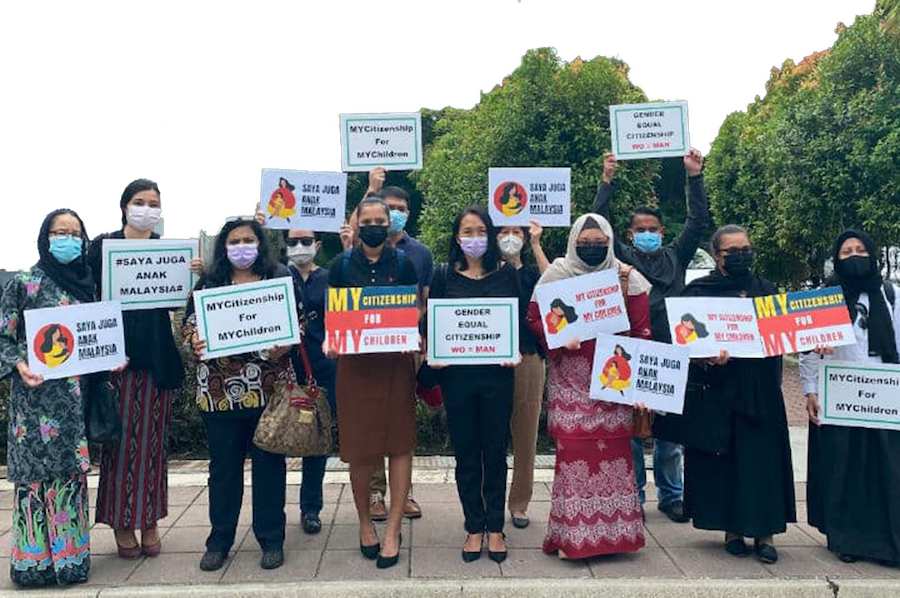
Shattering Malaysia’s Gender Barrier to Citizenship
If a Malaysian woman is married to a non-citizen, she cannot pass citizenship to her children. If she divorces, her children lose legal residency and face deportation. Women without Malaysian citizenship married to Malaysians navigate similar complex bureaucratic hurdles and impossible choices. In situations where women are in unsafe marriages, the law forces them to choose between their own autonomy and their children’s future in their home country.
Family Frontiers recognised these laws were outdated and unjust—they demanded constitutional change. With WFA’s support since 2021, they launched a comprehensive campaign targeting the law itself, not just its implementation.
Their strategy was multi-pronged and relentless. They trained and mobilised affected mothers as powerful advocates, built cross-sector coalitions with lawyers and rights groups, and sustained pressure through legal action, public campaigns, and global platforms.
The breakthrough came in 2024. Their coordinated efforts contributed to a landmark constitutional amendment granting Malaysian mothers the same right as fathers to confer citizenship to overseas-born children. When the amendment wasn’t retroactive, they secured a settlement allowing previously excluded mothers to apply for citizenship by registration.
Family Frontiers proved that when advocates target constitutional inequality itself, they don’t just change policies—they transform fundamental rights for generations.
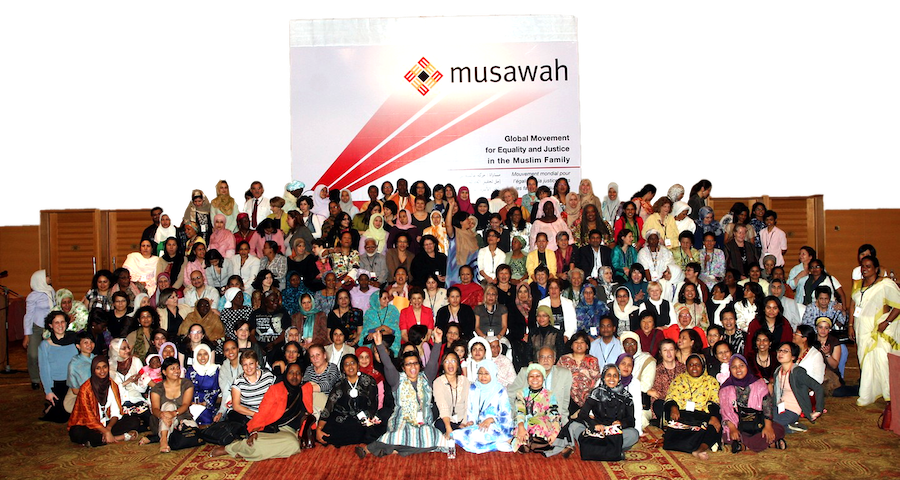
Securing Women’s Matrimonial Property Rights
In many parts of Pakistan, traditional legal interpretations systematically deny women shares in matrimonial property, regardless of their financial and non-financial contributions. Unless assets are legally registered in their names, women face devastation during divorce and inheritance processes.
Musawah is a global movement organisation pushing for equality and justice in the family in Muslim contexts. With WFA’s support since 2019, Musawah works with NGOs, activists, scholars, legal experts, policymakers, and changemakers from around the world.
In Pakistan, Musawah partnered with the Legal Aid Society (LAS)to argue that this denial of matrimonial property rights goes against Islamic values and international human rights principles.
In 2024, Musawah and LAS focused on building capacity among lawyers and legal professionals to effectively manage women’s matrimonial property cases, ensuring advocates understood both religious law and women’s rights.
The momentum created legislative opportunities. This groundwork enabled effective engagements with Members of Parliament, leading LAS and local partners to draft a proposed Women’s Rights to Matrimonial Property bill for the Parliamentary Women’s Caucus at federal and Sindh provincial levels—a major step towards long-overdue legal reform in Pakistan.
Crisis and Changing
Contexts

Over the past 20 years, we have witnessed women, girls, trans, and intersex people live through and withstand multiple crises, many of which are connected and compounding. Grantee partners are supporting their communities through intense natural disasters, economic shocks, public health crises, political turmoil, and armed conflict. We were regularly reminded that the majority of humanitarian aid is top-down and does not directly reach the hands of impacted communities nor groups of women, girls, trans, and intersex activists. Providing support through emergencies and crises is both morally and practically essential to achieve gender equality.
In 2023, WFA adopted a dedicated strategy for crisis and emergencies. Dedicated primarily to our current grantee partners, these grants ensure communities receive additional resources during times of hardship, and grantee partners can sustain their impact
Over twenty years, we have:
DISBURSED
USD 1.7 million
STRENGTHENED
132 grantee partners
Through WFA’s support, groups were able to:
Provide 3,500+ women with medical aid and psychosocial support during crises.
Promote the leadership of marginalised groups in disaster preparedness and risk governance.
Strengthen income generation and livelihood capacities for women, trans, and intersex people facing economic hardship during crises.
Advocate for equitable access to vaccines, maternal health services, and sexual and reproductive health and rights during crises.
From Crisis to Care: Women’s Fund Asia Responds to COVID-19
When COVID-19 struck Asia in early 2020, women bore disproportionate burdens during the pandemic. They lost livelihoods, faced increased domestic violence, yet remained excluded from most relief programs. Their survival was left to chance, their voices absent from emergency responses.
Women’s Fund Asia (WFA) recognised that effective crisis response required centering those most affected. In mid-2020, they launched the Kaagapay Fund—their first emergency-scale intervention providing direct support to feminist organisations across the region.
Their approach transformed immediate crisis into sustained community care. Swabhiman Society Haryana in India provided food and safety kits to 900 Mahadalit, Dalit, and nomadic families plus 1,500 individuals in need. In Nepal, Shakti Milan Samaj distributed food and protection materials to 80 women living with HIV/AIDS and their families, while covering rent for 20 HIV-positive women. Meanwhile, Women’s Network for Unity mobilised networks across Cambodia to deliver rice, food, protective equipment, and cash to over 1,200 sex workers and entertainment workers in 12 locations across four provinces.
This grassroots response demonstrates that feminist organisations are not just service providers—they are essential infrastructure for community survival, proving that crisis response and systemic change are inseparable.
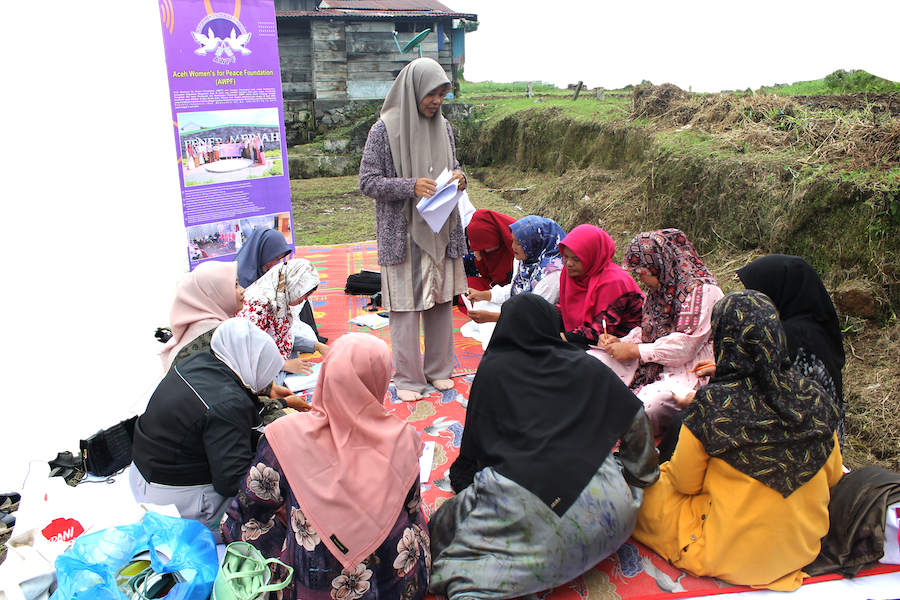
From Trauma to Leadership: Women Rebuild Aceh Village by Village
Women bore the heaviest burden in Aceh’s post-conflict landscape. They carried trauma from violence, shouldered responsibility for broken families, yet remained excluded from official recovery programs. Their healing was left to chance, their voices absent from rebuilding efforts.
Aceh Women’s for Peace Foundation (AWFP) recognised that sustainable peace required healing the healers. With WFA’s support since 2020, they’ve provided psychosocial first aid and trauma healing specifically for women, expanding this vital work into the underserved Bener Meriah region.
Their approach was both healing and empowering. AWFP established safe houses in five villages and trained 112 women and 10 girls in advocacy, survivor support, and reproductive health at the village level—transforming trauma survivors into community leaders.
The most remarkable outcome exceeded immediate healing. Grassroots women’s leadership didn’t just improve immediate safety for women in conflict-affected regions—it laid groundwork for systemic gender equality, proving that healing and empowerment are inseparable.
Strengthening grassroots organisations
Working with small grassroots organisations is crucial for driving meaningful social change because these groups are deeply embedded in the communities they serve and have firsthand understanding of local needs and challenges. Supporting grassroots efforts not only amplifies marginalised voices but also builds the sustainable, long-term impact as highlighted in the above stories. This is our largest grantmaking strategy, working across all themes to support capacity development, governance processes, institutional costs (like salaries and operations), sustainability plans, and the development of new and innovative strategies, tools and areas of work.

Over twenty years, we have:
DISBURSED
USD 7 million
STRENGTHENED
263 grantee partners
Through WFA’s support, groups were able to:
Formally register, expand membership, and access new funding sources.
Build second-line leadership and increase diversity in organisational leadership structures.
Support internal policies for team well-being, collective care, and safer work environments.
Promote digital security and feminist tech practices among frontline defenders.
Building Power from the Ground Up: How One Dalit Organisation Grew Strong
A Dalit women’s organisation in India is fighting tirelessly to advocate for Dalit children’s education access, re-enrolling girls who had dropped out of school, and confronting caste-based sexual and gender-based violence.
Their passion was undeniable, but their capacity was stretched thin. Working without institutional infrastructure meant survivors had nowhere safe to seek help, programs ran on volunteer energy alone, and advocacy efforts couldn’t scale beyond immediate communities.
WFA recognised that sustainable change requires sustainable organisations. Since 2019, consistent funding enabled the group to do what community donations never could—invest in their own institutional strength rather than just program delivery.
The transformation was comprehensive. They established vital internal policies and systems that created professional structure. Diverse hiring expanded their team, bringing fresh skills and perspectives to their mission. Most crucially, they set up an office—not just workspace, but a safe haven for survivors of caste-based atrocities.
This foundation multiplied their impact exponentially. What began as passionate but precarious advocacy evolved into a robust organisation capable of serving more Dalit women and girls while maintaining their grassroots authenticity and community leadership.
The organisation proved that institutional strength doesn’t compromise grassroots spirit—it amplifies grassroots power.
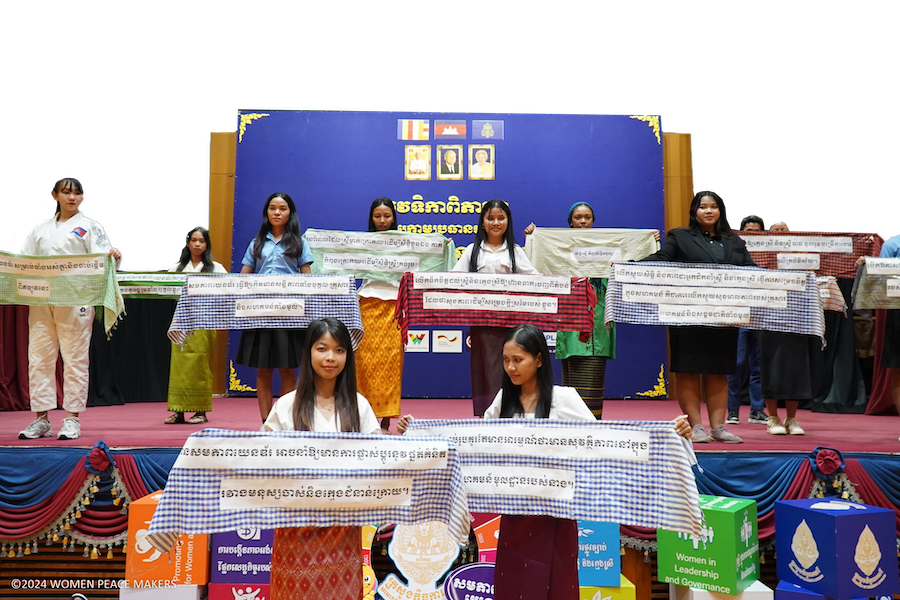
From Silenced to Heard: Strengthening Advocacy Capacity of Ethnic Minority Women
In Cambodia, women from Indigenous, Cham/Khmer-Islam, Khmer Krom, and Ethnic Vietnamese communities face double discrimination—marginalised for both their gender and ethnicity. Some are even denied full citizenship in their own country.
These women experience discrimination at every level. Heightened risk of gender-based violence, exclusion from education systems, and systematic erasure from national conversations. Their voices—already silenced by gender inequality—become doubly invisible because of their ethnic identity.
Women Peace Makers (WPM) recognised that transforming this reality required transforming who holds the microphone. With WFA’s support since 2021, they’ve equipped young women from marginalised communities to lead evidence-based advocacy through feminist participatory research, arts-based tools like forum theatre, and collective organising.
The strategy worked: voices became power. WPM’s efforts amplified minority women’s perspectives at local and national levels, directly contributing to shaping Cambodia’s National Action Plan on Women, Peace and Security.
Their influence reached international frameworks. WFA funding strengthened WPM’s advocacy ensuring minorities and stateless people were included in the UN Sustainable Development Cooperation Framework (2024–2028) for Cambodia.
WPM proved that when the most marginalised women control their own narratives, they don’t just find their voices – they reshape entire political landscapes.
Linking & Learning
Another cross-cutting strategy is to strengthen feminist networks, partnerships, and power. So in addition to core grants, we provide targeted grants that focus on building feminist knowledge and skills through community exchange and collective learning. Furthermore, we support travel and participation in key decision-making spaces to advance gender and resource justice. Though these grants are only about USD 3,000 on average, their impact is vast.
Over twenty years, we have:
DISBURSED
USD 380 thousand
STRENGTHENED
96 grantee partners
Through WFA’s support, groups were able to:
Represent the issues and concerns of women workers, including sex worker rights, indigenous women workers, and other marginalised groups, at the United Nations’ sessions of Commission on the Status of Women (CSW) and Convention on the Elimination of All Forms of Discrimination Against Women (CEDAW).
Enable the participation of grassroots leaders at panels and forums on digital spaces, the intersection of faith and rights based on sexual orientation and gender identity, and resource justice for LBTIQ+ advocacy in the region.
Launch and promote a book on feminist perspectives at one of Southeast Asia’s largest literary festivals.
Power in the Gathering: Building Skills, Solidarity, and Strategy
Real change doesn’t happen in isolation—it’s built in community. Gathering creates the conditions for deep learning, trust-building, collective strategy, and emotional resilience.
That’s why we invest in bringing activists together.
In 2019, we funded travel grants for activists to attend the CREA Reconference, a global gathering where feminism meets art, tech, and resistance. Grantee partners from Bangladesh, Nepal, India, Pakistan, Sri Lanka, and Thailand connected across borders and disciplines, exchanging powerful ideas. To ensure accessibility, we also funded interpreters, breaking down language barriers and opening space for wider participation.
In 2024, we supported the 4th Asia Pacific Feminist Forum (APFF), hosted by Asia Pacific Forum on Women, Law and Development (APWLD). With 550 participants from 35 countries, this dynamic forum sparked bold conversations across regions, identities, generations, and movements—uniting feminists to push for political, economic, and social transformation.
We also backed the Feminist Forum on Migration and Displacement, organised by Global Alliance Against Traffic in Women (GAATW). This gathering brought together migrant women workers and feminist organisations to confront the interlinked challenges of migration, labour, climate justice, and peacebuilding.
And in a historic moment, we supported the 1st Regional Asia-Pacific Congress on Women and Girls with Disabilities, held in Bangkok in December 2024. Nearly 100 disability rights activists from across the region came together to demand recognition, rights, and representation. The congress catalysed the revitalisation of a regional network working to strengthen advocacy from the grassroots to the regional level.
These are just some of the convenings we supported.
We know that spaces don’t just host conversations—they build networks, knowledge, and momentum for action.
Beyond Passwords: Feminist Security as Power, Practice, and Protection
Safety is political—and digital spaces are feminist frontlines.
In 2023, WFA launched a groundbreaking digital and holistic security training in Nepal, bringing together 32 feminist activists from 12 countries across South, Southeast, and East Asia. At a time when surveillance, criminalisation, and online harassment are on the rise, we recognised a critical gap: security is often missing from feminist movement-building.
This wasn’t just a workshop—it was a space to speak truth. Participants shared raw, personal experiences of digital threats, burnout, and repression. Together, they began building the skills and solidarity needed to defend themselves, their organisations, and their movements—both online and offline.
The momentum continued in 2024, with a follow-up training in Bangkok. This time, 35 activists from 10 countries came together to go deeper: integrating digital security into broader feminist safety frameworks, enhancing practical skills, and strengthening cross-border strategies.
The impact was immediate and tangible: activists began using stronger password protocols and secure data storage tools; organisations adopted privacy-conscious workflows; adaptations were made to include activists with disabilities—like accessible tools for visually impaired women.
One participant put it clearly:
“Our communities are impacted by tech—but many don’t understand its risks or opportunities. Online advocacy isn’t even accessible to people on the ground.”
That’s exactly why we act. Because security is not a luxury—it’s a necessity. And women, girls, trans, and intersex people deserve the tools and skills not to just survive, but thrive in a digital world.
Partnering and influencing for more resources
In Asia, over one-third of women’s rights organisations operate on less than USD 30,000 a year. That’s not just underfunding—it’s under-valuing frontline leadership.
At WFA, we’re changing that. As part of a wider funding ecosystem, we work in solidarity with a diverse network of partners across the region and globally. Together, we’re shifting how power and resources flow—so that more funding reaches the heart of movements, not just the margins.
Our team values and practices needs-based, context-responsive funding—not a one-size-fits-all approach. More and more evidence shows that trust-based models enable greater adaptability, innovation, and less time on heavy reporting and administrative burdens.
At WFA, we lead by doing. We share what we learn. We push for more funders to adopt our impactful values by influencing strategies, frameworks, and policies on gender equality, social inclusion, foreign policy, and development aid.
Over twenty years, we have:
FUNDRAISED
USD 55 million
PARTNERED WITH
26 donors and funders
Thank you to all of WFA’s supporters!
Over 20 years, WFA has cultivated support from diverse partners with government agencies, private and public foundations, and multi-regional women’s funds committed to advancing gender equality and human rights in Asia. We are grateful to all of our current and past partners for believing in us:
- Comic Relief
- Department of Foreign Affairs and Trade, Australia
- Equality Fund
- Fenomenal Funds
- Filia die Frauenstiftung (not current)
- Fondation Chanel
- Ford Foundation
- Fondo Centroamericano de Mujeres
- Foundation for a Just Society
- Gates Foundation
- Global Fund for Community Foundations
- Global Fund for Women
- Levi Strauss Foundation
- Mama Cash
- Ministry of Foreign Affairs, The Netherlands
- New Venture Fund
- Oak Foundation
- Open Society Foundation
- Prospera – The International Network of Women’s Funds
- Silicon Valley Community Foundation
- Stichting Benevolentia
- Swedish International Development Cooperation Agency
- Tides Foundation
- United Nations Foundation
- Urgent Action Fund Africa
- Wellspring Philanthropic Foundation
- Women Win Foundation Inc.

Not Recipients—Leaders: Reclaiming Power in the Global South
This wasn’t business as usual. It was a South-to-South model of partnership grounded in shared values, local leadership, and collective power. Alongside the African Women’s Development Fund, Fondo de Mujeres del Sur, and the International Indigenous Women’s Forum/AYNI Fund, we mobilised an unprecedented EUR 42 million grant from the Ministry of Foreign Affairs of the Netherlands—marking a major turning point in how donors engage with funders rooted in the Global South.
And we didn’t stop there. After a strong first phase, we collectively secured an additional EUR 80 million to extend the programme through 2025. Fondation CHANEL also joined the consortium in 2022, affirming the value of feminist-led collaboration.
In just eight years, Leading from the South has:
Supported 1,123 organisations in 83 countries across Asia, Africa, and Latin America.
Distributed over EUR 88 million in primarily multiyear, flexible grants.
Advanced not only gender justice, but also democracy, environmental justice, public health, disability rights, Indigenous rights, and economic justice.
This is more than funding—it’s infrastructure for impact. An overwhelming 87% of our grantee partners report that they now feel stronger, more equipped, and more connected: They’re planning and leading powerful advocacy, managing resources with confidence, and participating in decision-making spaces.
In other words —they’re shaping the future.
As one representative from the Ministry of Foreign Affairs of the Netherlands put it:
“Your work on promoting and supporting the leadership of women, girls, trans, and intersex people made a difference. In this work, you always try to reach the most marginalised communities with a strong understanding of human rights and a rights-based approach…; in times of COVID and the pushback against gender, you’re not giving up. If times get tough, you always seek new ways to make it work. You inspire us as a Ministry in feminist programming and to try new ways as a donor.”
Standing shoulder to shoulder to raise new roofs
At Women’s Fund Asia, we know we don’t move alone—and we don’t want to. Our work is deeply connected to a powerful global and regional ecosystem of feminist funds. Rather than competing, we come together to share knowledge, shape strategy, and collectively push for political and financial support for feminist movements. Because when one of us rises, we all rise. We’re proud to play a supportive and collaborative role in the funding landscape—flipping the script on competition and centering solidarity.
WFA’s support to other feminist funds shows up in many ways:
Providing grants for the institutional strengthening of national women’s funds in Nepal, Mongolia, and Fiji.
Providing fiscal sponsorship to women’s funds in South Korea and Hong Kong.
Co-organizing regional convenings that center collective care, wellbeing, and healing—tools we all need to build resilience in a world of overlapping crises.
“As a regional feminist fund, you are a true friend and unwavering supporter of women’s funds—especially in Southeast Asia. Women’s Fund Asia plays a vital role in influencing funders to bring more resources to grassroots and feminist movements.”
— Urmila Shrestha, Tewa (Nepal)
Our collaborative spirit also fuels innovation. Together with other funds, we’ve helped:
Launch the Pacific Feminist Fund—the first fund dedicated to women’s and gender-diverse organisations in the Pacific region
Shape a catalytic partnership model with foundations and corporate funders to pool funds towards women’s economic resilience, safety, and health
Co-develop the design, vision and agendas of other critical global networks like Alliance for Feminist Movements, First Response Fund, and RISE, among others
Co-create a shared vision for feminist funding that is flexible, transformative, and rooted in regional realities resulting in a collective manifesto that now guides us as a unified voice
This is what feminist solidarity in action looks like: bold collaboration, shared leadership, and deep mutual support. Because real change doesn’t come from working alone—it comes from building something together.
In 2020, Women’s Fund Asia Limited (WFAL) was registered as a not-for-profit company limited by guarantee in Australia with registration under the Australian Charities and Not for Profit Commission. WFAL is a subsidiary of WFA, and its operations are controlled by WFA. WFA is the sole member of the Company. The Executive Director of WFA serves as its Executive head, with the responsibility of making it fully operational in a way to serve the mandate of WFA.
Power your inbox with the latest news and updates from Women's Fund Asia
Contact
For general inquiries: info@wf-asia.org
For grant-related concerns: grants@wf-asia.org
Powered by Tyne Solutions
Artworks by Ann Mendis and Ladyfingers